

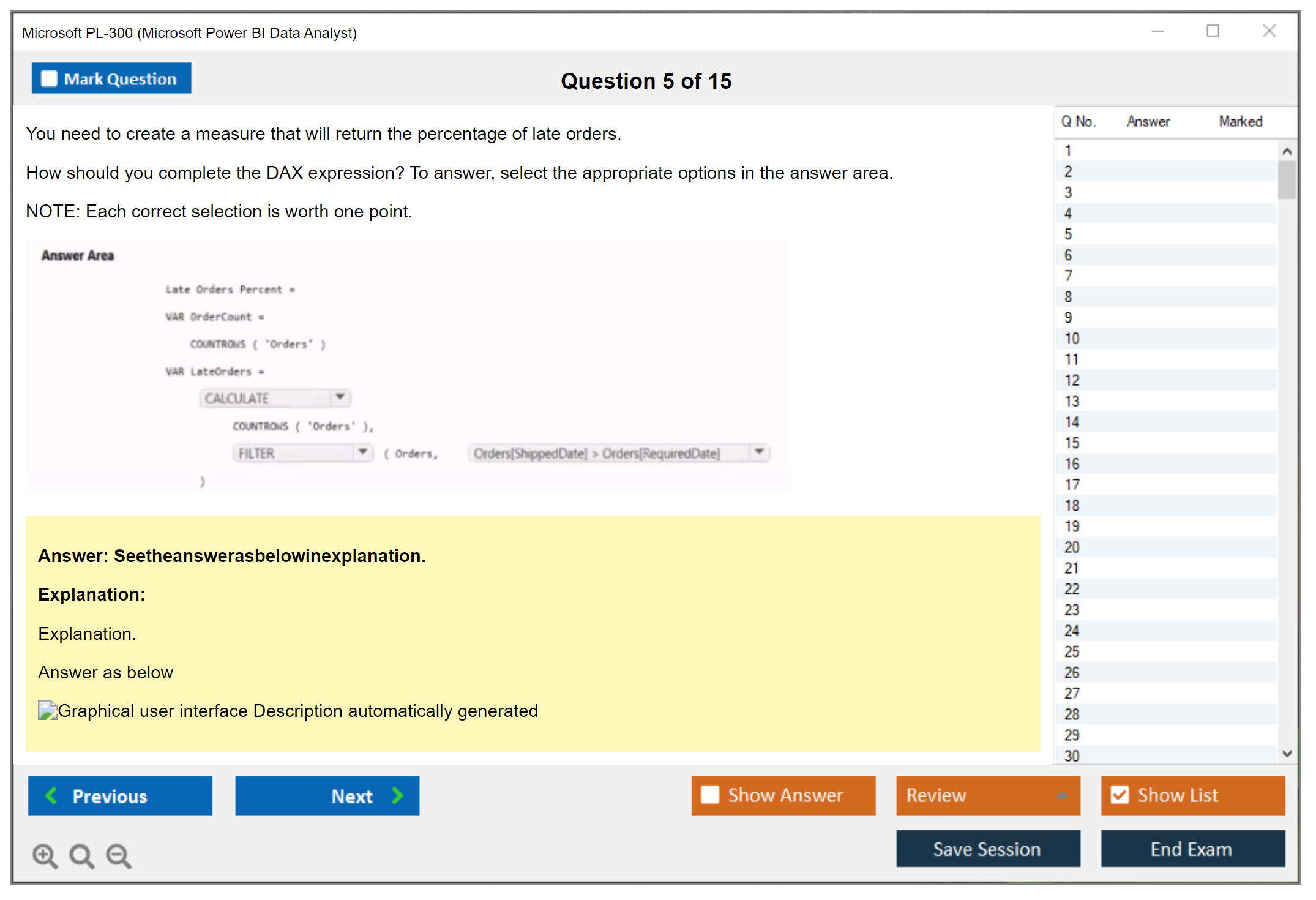
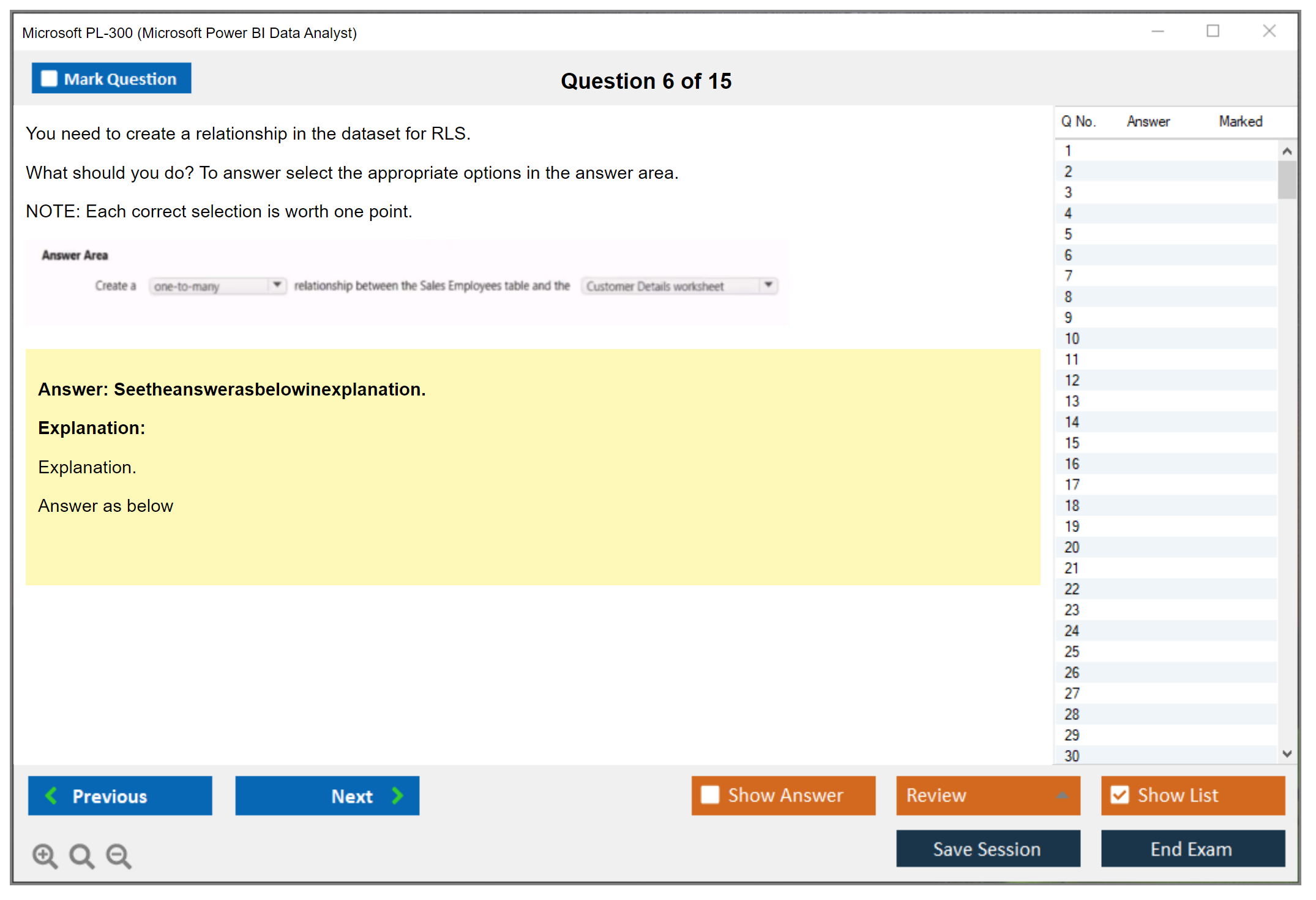
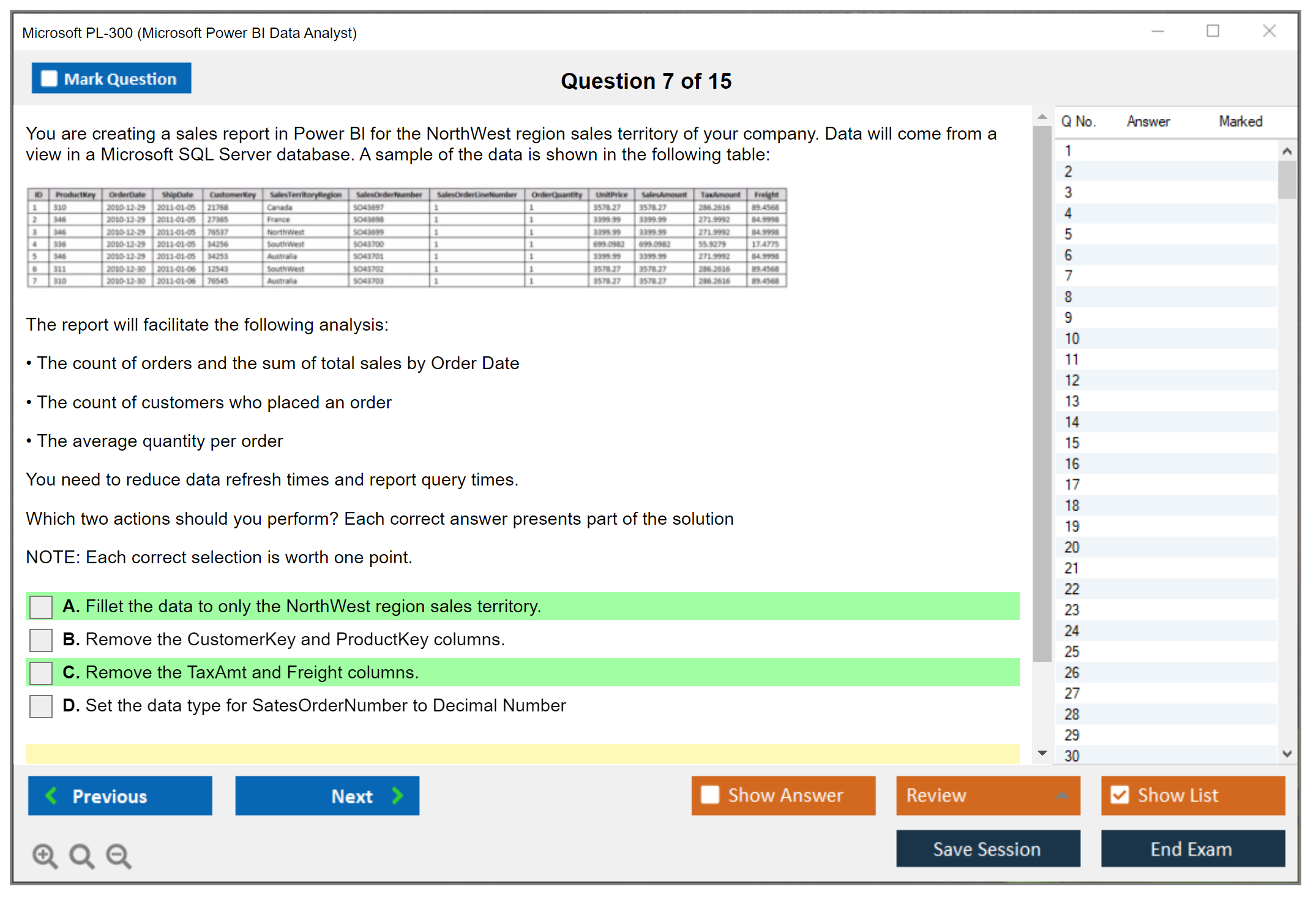
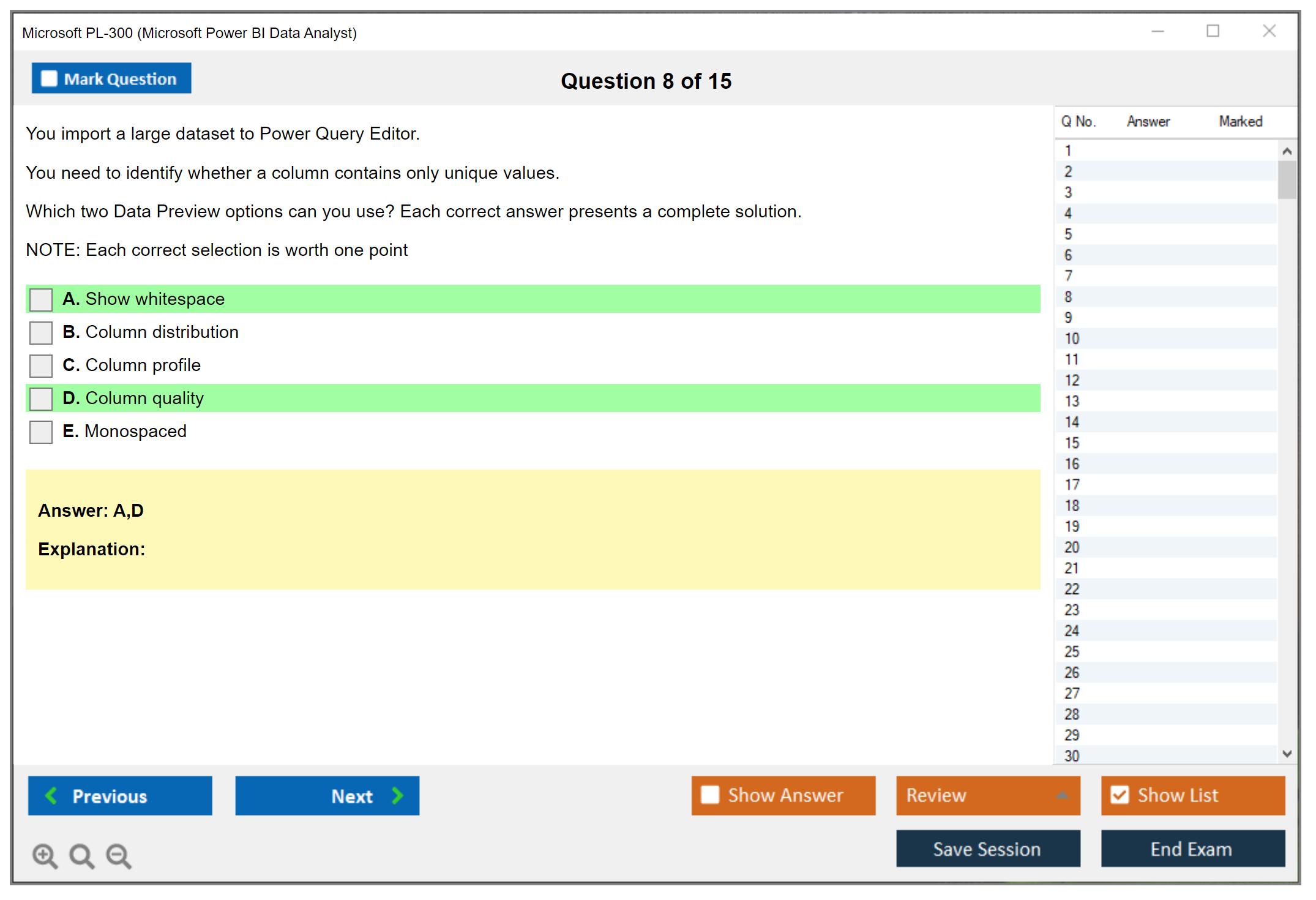
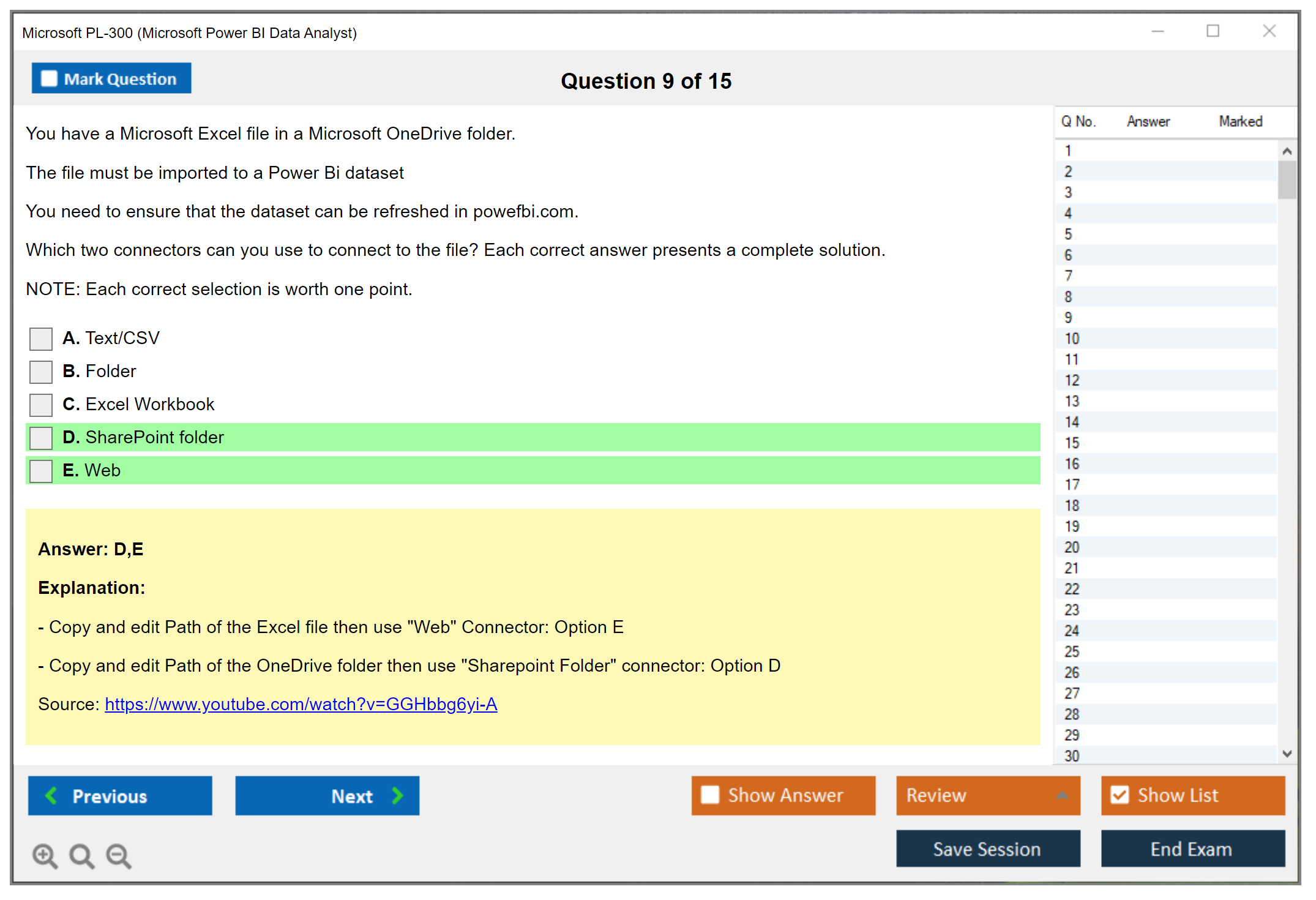
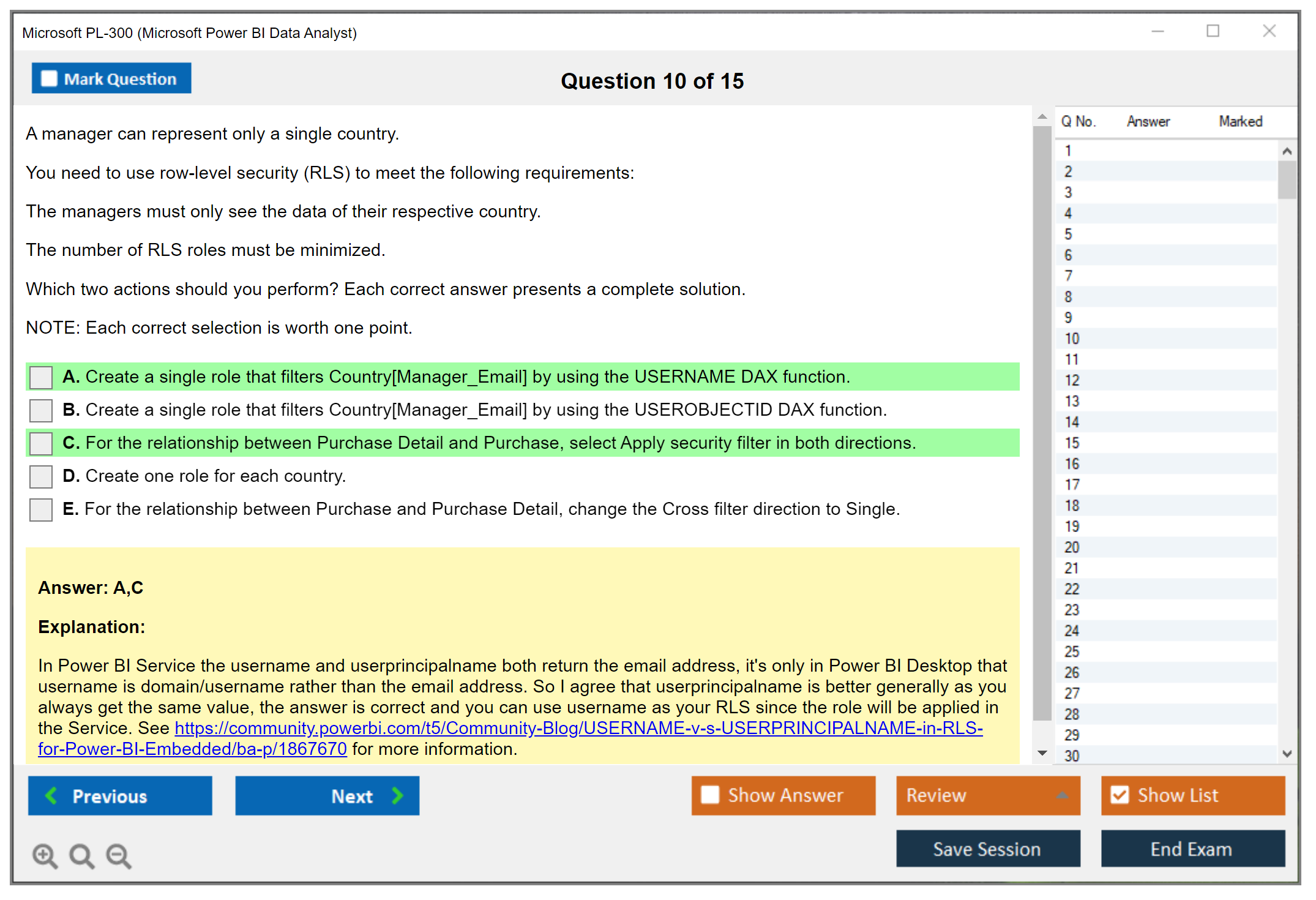
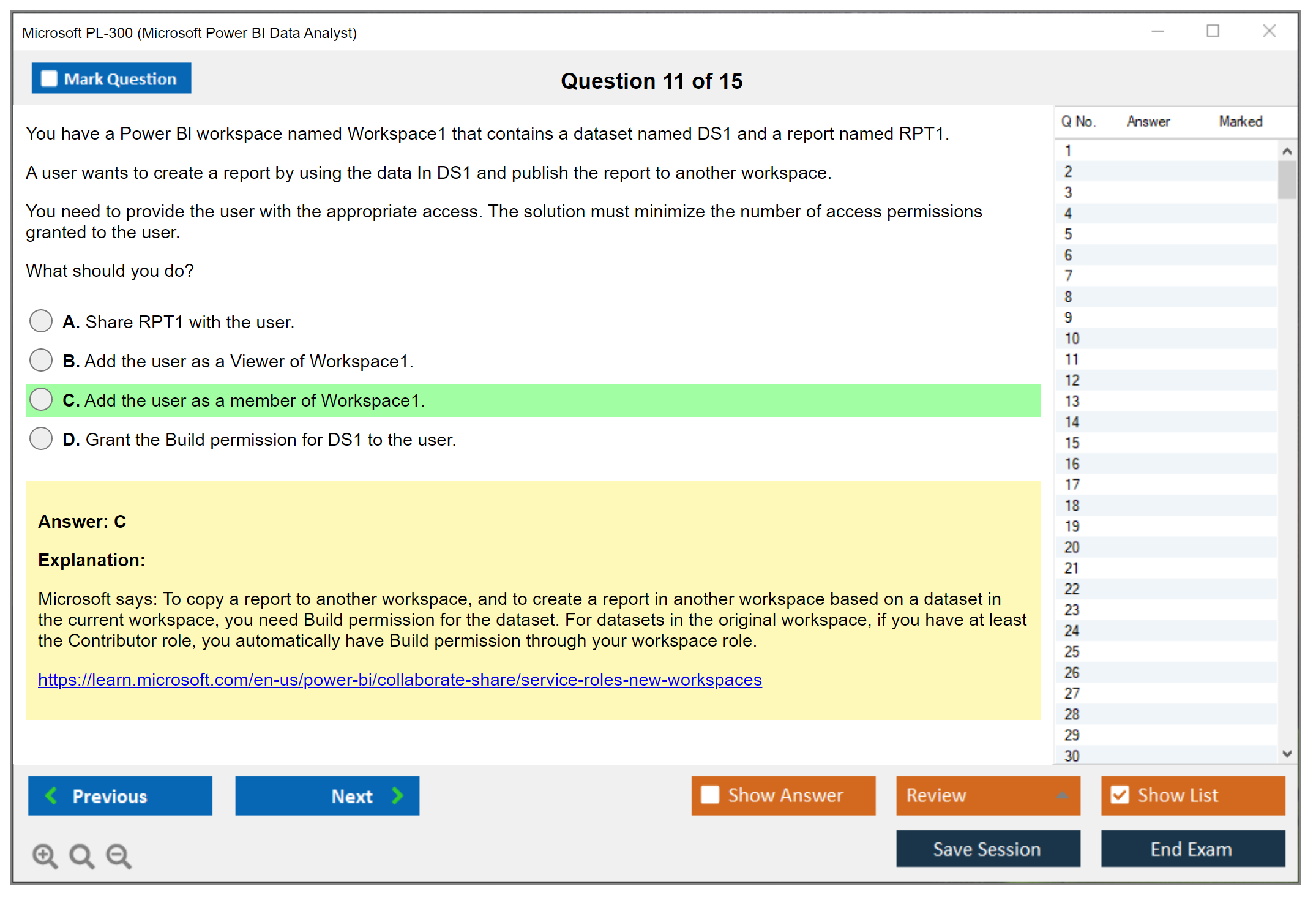
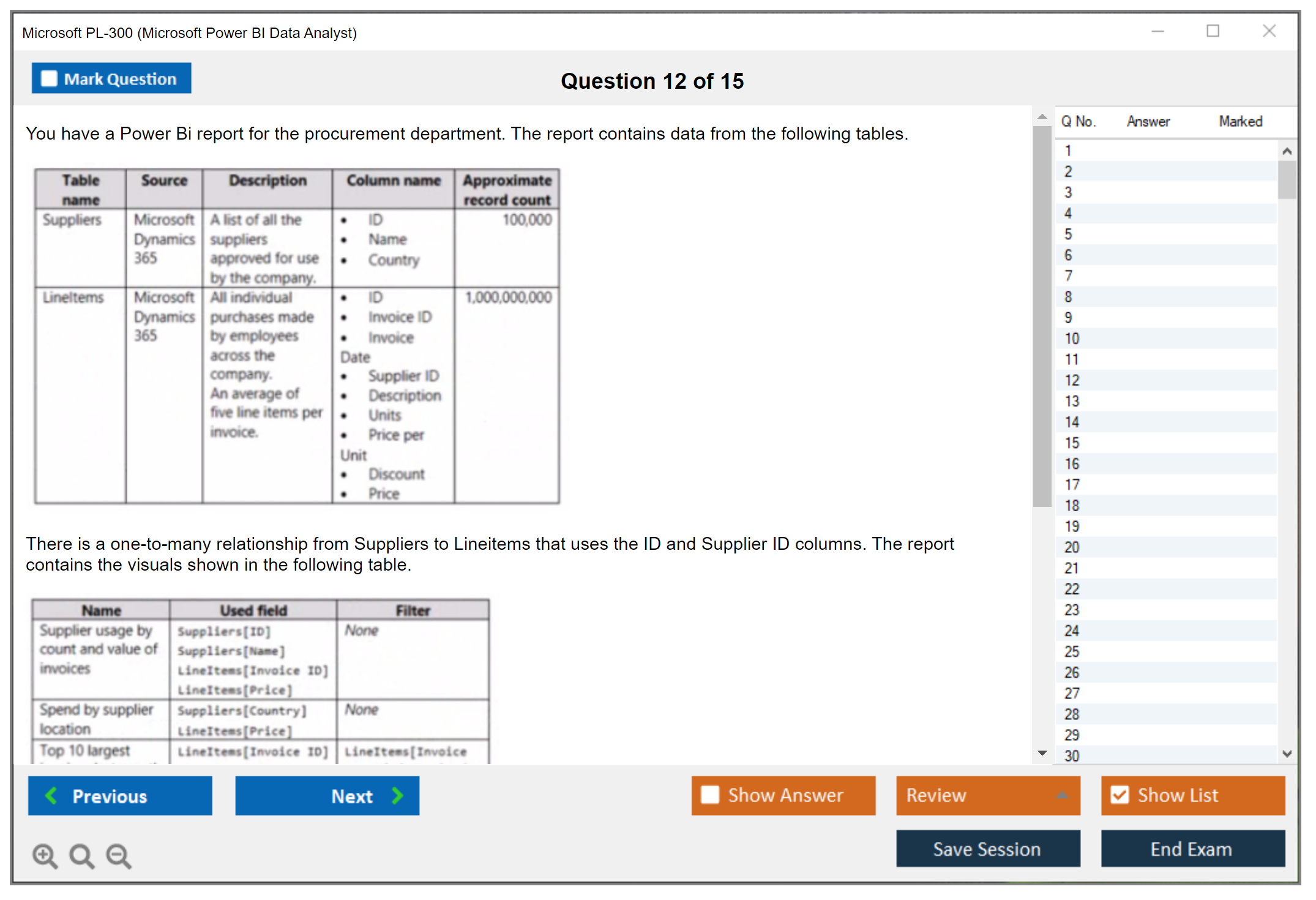
Microsoft PL-300 (Microsoft Power BI Data Analyst)
What is the Microsoft PL-300 (Power BI Data Analyst) certification?
The Microsoft PL-300 certification proves you actually know what you're doing with Power BI, not just that you can drag-and-drop some visuals and call it a day. Lots of people mess around with Power BI at work, but this credential (officially titled "Microsoft Power BI Data Analyst Associate") shows you can transform messy, chaotic datasets into reports and dashboards that people actually use to make business decisions. It's not some participation trophy. Microsoft designed PL-300 to validate real-world skills: connecting to data sources, cleaning up garbage data, building proper data models, creating visualizations that don't make stakeholders' eyes glaze over, and deploying everything securely.
This cert replaced the legacy DA-100 exam back in 2021, and honestly, the refresh was needed. Power BI evolves constantly. New features drop monthly. The Power BI exam PL-300 keeps pace with what's current in the platform, not what was relevant three years ago.
Who should take PL-300?
Data analysts are obvious candidates. If you're already building reports and working with datasets daily, PL-300 formalizes those skills. But it's for traditional analysts. Business intelligence pros jumping ship from Tableau or QlikView to the Microsoft ecosystem? Yeah, this cert helps validate your transition and proves you're not just winging it in a new tool.
Business analysts who regularly wrangle data will find value here. Report developers tasked with creating interactive dashboards for executives who want to slice-and-dice metrics seventeen different ways. SQL developers looking to expand beyond queries and stored procedures into modern BI? PL-300 fits perfectly. Data scientists who can build amazing models but struggle to communicate results visually to non-technical stakeholders? This cert addresses that gap.
I've also seen IT professionals supporting Power BI deployments pursue PL-300 to understand governance, security, and deployment best practices from the inside. Consultants advising clients on Power BI implementations absolutely should have this. Nothing kills credibility faster than giving advice about a platform you're not certified in. Career changers entering analytics want industry-recognized credentials. PL-300 delivers that stamp of approval. Students and recent grads building foundational BI skills can use this as a launchpad. Even Excel power users ready to graduate from pivot tables to enterprise-grade analytics tools find PL-300 valuable.
Project managers overseeing BI initiatives might seem like an odd fit, but understanding the technical capabilities and limitations of Power BI helps them scope projects realistically and communicate effectively with technical teams. I worked with a PM once who kept promising clients features that literally didn't exist in Power BI yet, which created all kinds of awkward conversations later when delivery time came around.
Skills validated by PL-300
Microsoft breaks down the exam into four main domains, and they're not evenly weighted. Some areas matter more than others on test day.
Preparing data covers connecting to everything from SQL databases and Excel files to web APIs and cloud storage platforms. You need to know how to profile data to spot quality issues before they bite you later. Cleaning and transforming data using Power Query M language and the Power Query Editor is huge here. Filtering, sorting, grouping, pivoting, unpivoting, all that fun stuff. Combining data from multiple sources through joins, merges, and append operations gets tested heavily.
Modeling data is where things get serious. You're designing star schemas with fact and dimension tables optimized for query performance, not just throwing tables together and hoping relationships auto-detect correctly. Creating and managing relationships using primary and foreign keys matters. But the real meat is DAX and data modeling for Power BI: calculated columns, measures, calculated tables, all built with DAX functions. You need to understand aggregation, filter context, row context, time intelligence functions like SAMEPERIODLASTYEAR, iterator functions like SUMX. Optimizing data models for performance through proper data types, cardinality settings, and cross-filter direction isn't optional. Role-playing dimensions, many-to-many relationships. These trip people up constantly.
Visualizing and analyzing data tests your ability to create reports that don't suck. Various visualization types: charts, tables, maps, custom visuals from AppSource. Power BI dashboards and reports certification-level formatting means professional outputs, not something that looks like a high school science project. Implementing drill-through, bookmarks, buttons, page navigation for better UX. Creating and managing parameters for dynamic scenarios. Row-level security (RLS) to control data access based on user roles is critical in enterprise environments. AI-powered features including Quick Insights, Key Influencers, Decomposition Tree visuals. Microsoft wants you comfortable with these.
Deploying and maintaining deliverables covers publishing reports to Power BI Service workspaces with appropriate permissions. Configuring scheduled refresh and understanding gateway requirements for on-premises data sources trips up people who've only worked with cloud data. Creating and managing Power BI apps for content distribution. Implementing deployment pipelines for dev, test, and production environments. Monitoring usage metrics, performance, user adoption. Managing datasets, dataflows, workspace collaboration settings. Troubleshooting common issues like data refresh failures, performance bottlenecks, connectivity problems.
PL-300 exam cost and scheduling
PL-300 exam cost runs $165 USD in most markets, though regional pricing varies. Microsoft occasionally offers discounts for students, educators, or through promotional events. That price gets you one attempt. Fail and you're paying again, so preparation matters.
You schedule through Pearson VUE, either at a testing center or via online proctoring from home. Online proctoring sounds convenient, and it is, but you need a clean workspace with no extra monitors, a working webcam, stable internet, and the ability to tolerate a proctor watching you through your camera for 2+ hours. Testing centers eliminate those variables but require you to show up at a specific location and time.
Retake policy? Straightforward but unforgiving. Fail once and you wait 24 hours before retaking. Fail a second time and you wait 14 days. Fail a third time? 14 more days. After five failures you're locked out for a year. Most people don't fail five times, but that second failure triggering a two-week wait can derail study momentum.
PL-300 passing score and how Microsoft scores it
The PL-300 passing score is 700 on a scale of 1-1000. That sounds like 70%, but it's not that simple. Microsoft uses scaled scoring, which adjusts for exam difficulty variations across different question sets. Two people might answer different numbers of questions correctly but both score 700 because one exam version was slightly harder.
You won't know your exact percentage. The score report shows your overall scaled score and performance in each skill area measured: "Above" or "Below" target. This helps identify weak areas if you fail, but it's frustratingly vague if you're close to passing and want to know exactly where you fell short.
Questions aren't worth equal points. Some complex scenario-based questions carry more weight than straightforward multiple-choice. Microsoft doesn't publish exact weightings, which makes gaming the exam impossible. You need broad competency across all domains.
PL-300 difficulty and study time
PL-300 exam difficulty depends heavily on your background. Complete beginners with no Power BI experience? You're looking at a really difficult exam that'll require 80-120 hours of study over 2-3 months. Experienced analysts who use Power BI daily but haven't formalized their knowledge? Maybe 40-60 hours over 4-6 weeks focusing on gaps.
Common challenging areas include DAX, especially filter context manipulation, context transition, and time intelligence functions. Data modeling for performance optimization trips people up because it requires understanding cardinality, bidirectional filtering implications, and when to denormalize versus maintain star schema purity. Row-level security implementation gets complicated fast when you're dealing with dynamic security based on user attributes. Deployment and governance topics feel abstract if you've only worked in small organizations without formal BI governance.
How long to study really depends. Got SQL experience and understand data modeling concepts from database work? You'll pick up Power BI's approach faster. Coming from Excel with no database background? Expect a steeper learning curve on relationships and normalized data structures.
PL-300 prerequisites and recommended experience
Microsoft lists no formal PL-300 prerequisites. Anyone can register and take the exam. But recommended experience is another story entirely. Microsoft suggests working knowledge of data analytics concepts, familiarity with the Microsoft data platform (Azure SQL Database, Azure Synapse, Azure Data Lake), and hands-on experience with Power BI Desktop and Power BI Service.
Realistically, you want comfort with Power Query M language for data transformation, DAX basics for calculations, and data modeling fundamentals like normalization, star schemas, and dimensional modeling. Tools to be familiar with include Power BI Desktop (obviously), Power BI Service for publishing and collaboration, and on-premises data gateways for connecting to non-cloud data sources.
If you're coming from a related certification like DP-300 (Administering Relational Databases on Microsoft Azure) or DP-203 (Data Engineering on Microsoft Azure), you've got a head start on data concepts and Azure integration. If you're earlier in your Microsoft path, maybe you started with DA-100 (Analyzing Data with Microsoft Power BI), PL-300's predecessor, and you're updating your credential.
Best PL-300 study materials
Microsoft Learn PL-300 learning paths are the official free resource, and honestly they're pretty solid. Microsoft structures these as self-paced modules covering each exam objective with hands-on exercises. You're not just reading. You're building reports and models in practice environments.
Instructor-led training through Microsoft partners or training companies offers structured learning with live instructors who can answer questions. More expensive than self-study but valuable if you learn better with guidance and accountability.
Documentation to focus on includes the DAX function reference. You need to know which functions exist and what they do. Power Query M language reference for transformation scenarios. Row-level security documentation for implementing dynamic security. Gateway documentation if you'll work with on-premises data sources.
Look, you also want hands-on experience with real datasets. Download public datasets from Kaggle or government data portals and build complete solutions: connect, transform, model, visualize, publish. Nothing replaces actually doing the work.
PL-300 practice tests and exam prep strategy
PL-300 practice tests from reputable vendors like MeasureUp or Whizlabs help you understand question formats and identify weak areas. Avoid brain dump sites that just recycle actual exam questions. That's cheating, violates Microsoft's terms, and doesn't actually teach you anything. Plus, Microsoft rotates questions, so memorized answers become useless fast.
Hands-on practice projects matter more than passive studying. Build dashboards analyzing sales data with time intelligence comparisons. Create models with role-playing dimensions. Implement row-level security for different user roles. Optimize slow-performing reports by fixing relationships and reducing visual complexity.
Final-week revision should focus on weak areas identified through practice tests, not trying to learn new topics. Review DAX functions you struggle with. Practice creating specific visualization types. Walk through deployment scenarios from Desktop to Service to App distribution.
A readiness checklist helps: Can you connect to ten different data source types without Googling? Can you write DAX measures using CALCULATE, FILTER, and time intelligence functions? Can you explain bidirectional filtering implications? Can you configure incremental refresh? Can you troubleshoot gateway connectivity issues?
PL-300 renewal and maintaining your certification
PL-300 renewal requirements changed recently. Microsoft moved to assessment-based renewal instead of requiring full recertification exams. Your certification expires one year after earning it, but you can renew starting six months before expiration by passing a free online assessment.
The renewal assessment covers updated content reflecting new Power BI features and capabilities introduced since you certified. It's open-book, shorter than the full exam, and you can retake it if you fail. But don't blow it off. You still need to demonstrate current knowledge.
Microsoft sends renewal reminders via email, but ultimately it's your responsibility to track expiration dates and complete renewals on time. Let it lapse and you lose the certification. You'll have to take the full exam again to recertify.
What changes to expect? Power BI evolves constantly. New visual types, AI features, integration with Fabric and other Microsoft services, updated DAX functions, enhanced governance capabilities. The renewal process ensures certified professionals stay current rather than coasting on knowledge from years ago.
Is PL-300 worth it for data analysts and BI developers?
Honestly? Yes, if you work in the Microsoft ecosystem or plan to. Power BI dominates corporate BI adoption, and having official certification helps you stand out when 47 other candidates claim "Power BI experience" on their resumes. It validates you didn't just take a weekend Udemy course.
For career advancement, PL-300 opens doors to data analyst, BI developer, and analytics consultant roles. Salary impact varies by market, but certified professionals typically command 10-15% higher compensation than non-certified peers with similar experience.
Not gonna lie though. Certification alone doesn't make you competent. You need hands-on experience building real solutions for actual business problems. PL-300 validates knowledge, but employers hire based on demonstrated ability to deliver results.
PL-300 vs DA-100: what changed
PL-300 replaced DA-100 in March 2021. Content updates reflected Power BI's evolution: new features like deployment pipelines, enhanced dataflows, composite models, and updated AI capabilities. Question formats shifted toward more scenario-based problems requiring integrated knowledge across multiple skill areas rather than isolated fact recall.
If you hold DA-100, you didn't need to recertify immediately, but the expiration and renewal schedule applies the same way. The core competencies remain similar. PL-300 just reflects current platform capabilities and best practices.
What jobs does PL-300 help you qualify for?
Power BI Data Analyst is the obvious one. Business Intelligence Developer roles building enterprise reporting solutions. Analytics Consultant positions advising clients on BI strategy and implementation. Report Developer roles creating dashboards for specific departments or business units. Data Analyst positions requiring visualization and communication of analytical findings to non-technical audiences.
Some Data Engineer roles value PL-300 because the boundary between engineering and analytics blurs in smaller organizations. BI Architect positions for senior professionals designing enterprise-wide analytics solutions. Even some Data Scientist roles appreciate strong visualization skills for communicating model results and insights.
Salary ranges vary wildly by location and experience, but entry-level Power BI analysts start around $55-70k in most US markets. Mid-level around $75-95k. Senior and architect roles hitting $100-140k or more. Add PL-300 certification, relevant experience, and complementary skills like SQL or Python, and you're competitive for solid opportunities.
PL-300 exam overview
What is the Microsoft PL-300 (Power BI Data Analyst) certification?
Microsoft PL-300 certification is the one most hiring managers recognize as "yes, this person can actually build and ship Power BI stuff." It maps to the Power BI Data Analyst Associate role, so the focus is reporting, modeling, DAX, refresh, and the day-to-day decisions you make when someone drops a messy dataset on your desk and wants a dashboard by Friday. Real work. Real constraints.
Who should take PL-300?
Report builders. Analysts who live in Excel. BI folks moving off SSRS. Also, honestly, anyone who keeps getting pulled into "can you fix this Power BI model?" tickets at work. The exam is basically that life, just compressed into 100 minutes and a lot more screenshots.
Skills validated by PL-300
You're proving you can go from raw data to a published solution: Power Query cleanup, DAX and data modeling for Power BI, visuals that don't lie, security basics like RLS, and the boring but necessary Service-side stuff like refresh and workspace permissions. Not theory. Muscle memory.
PL-300 exam overview
The Power BI exam PL-300 consists of 40-60 questions to be completed within 100 minutes, plus an extra 20 minutes for instructions and the post-exam survey. Time goes fast. Like, weirdly fast. A few questions will be quick wins, but the scenario ones and interactive ones can eat your clock if you overthink them. We all do under pressure even when we know better.
This exam's hands-on and scenario-based rather than memorization of random product features, which sounds nicer until you realize you can't just cram a glossary and call it a day. Questions reflect real-world situations Power BI Data Analysts run into constantly: "why is this refresh failing," "why is this measure returning blanks," "why did you model it like that," or "who can see what in this workspace." Microsoft also regularly updates the exam content to match current product capabilities and best practices, so if you're studying from ancient notes, you're gonna have a bad time.
Language options are pretty broad: English, Japanese, Chinese (Simplified), Korean, German, French, Spanish, Portuguese (Brazil), Arabic, Russian, Indonesian, and Italian. That matters if you're working in a non-English environment, because Power BI terms can be inconsistent across translations and UI language settings. Small thing. But it trips people. I've seen someone spend ten minutes looking for a button that was just translated differently than their practice material.
Exam format and question types
Expect a mix. Lots of it.
- Multiple choice: one correct answer from 4-5 options. These usually test concepts and best practices, like when to use Import vs DirectQuery, or what visual interaction makes sense.
- Multiple response: pick all correct options. These are sneaky because one missed checkbox is still wrong, and they often cover broad config topics like refresh + gateway + credentials.
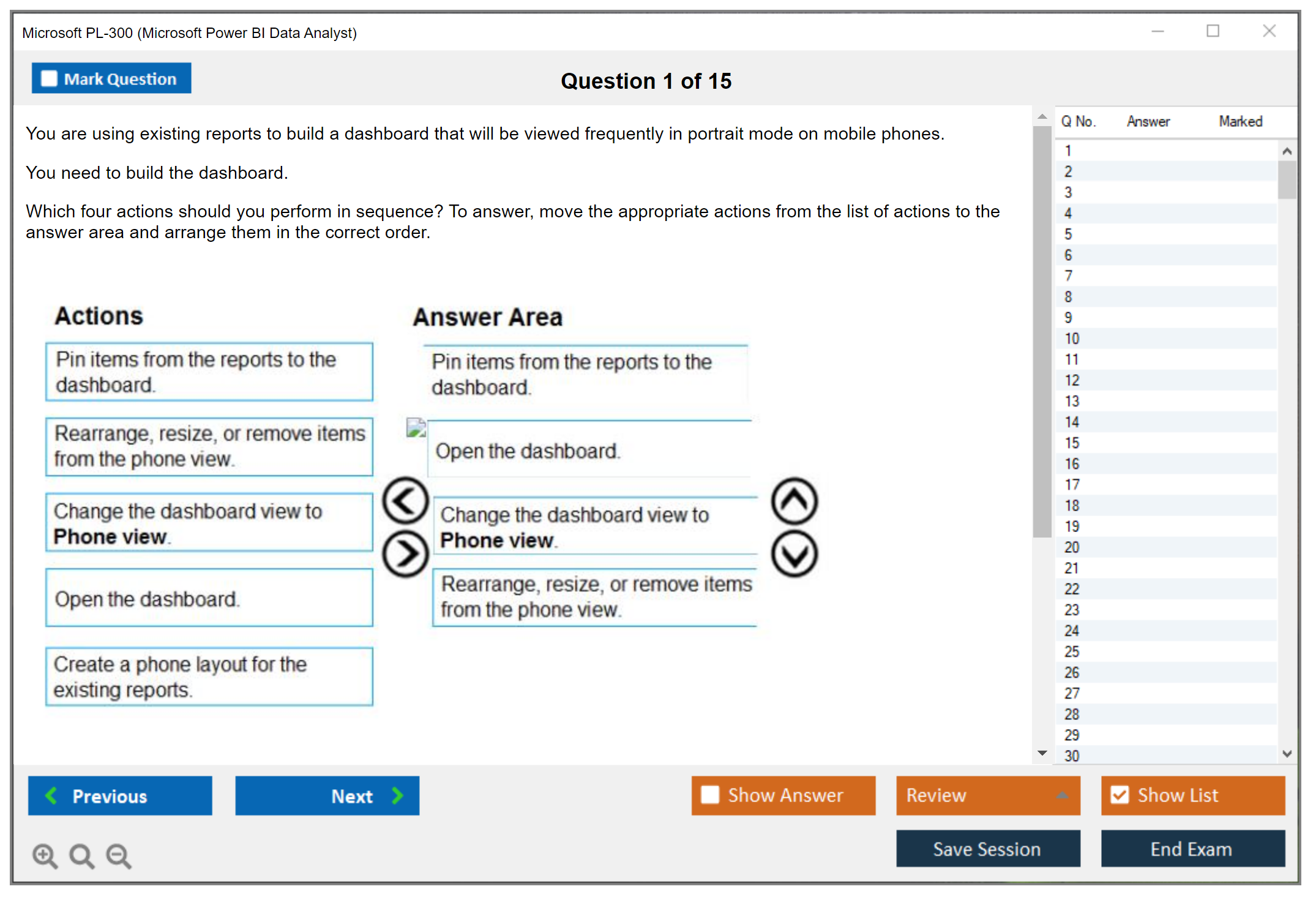
- Build list: put steps in the right order. Think workflow stuff, like the sequence for data prep or publishing.
- Case studies: a business scenario with multiple questions tied to it. The case study questions stay accessible while you're in that case study section, but once you move on, you can't go back. Same deal with any case study section: once completed, it's gone.
- Active screen: interactive simulations where you do actual tasks in something that looks like Power BI Desktop or the Service. Creating measures. Configuring visuals. Setting relationships. It's not a full Power BI session, but it's close enough to punish you if you only studied by reading.
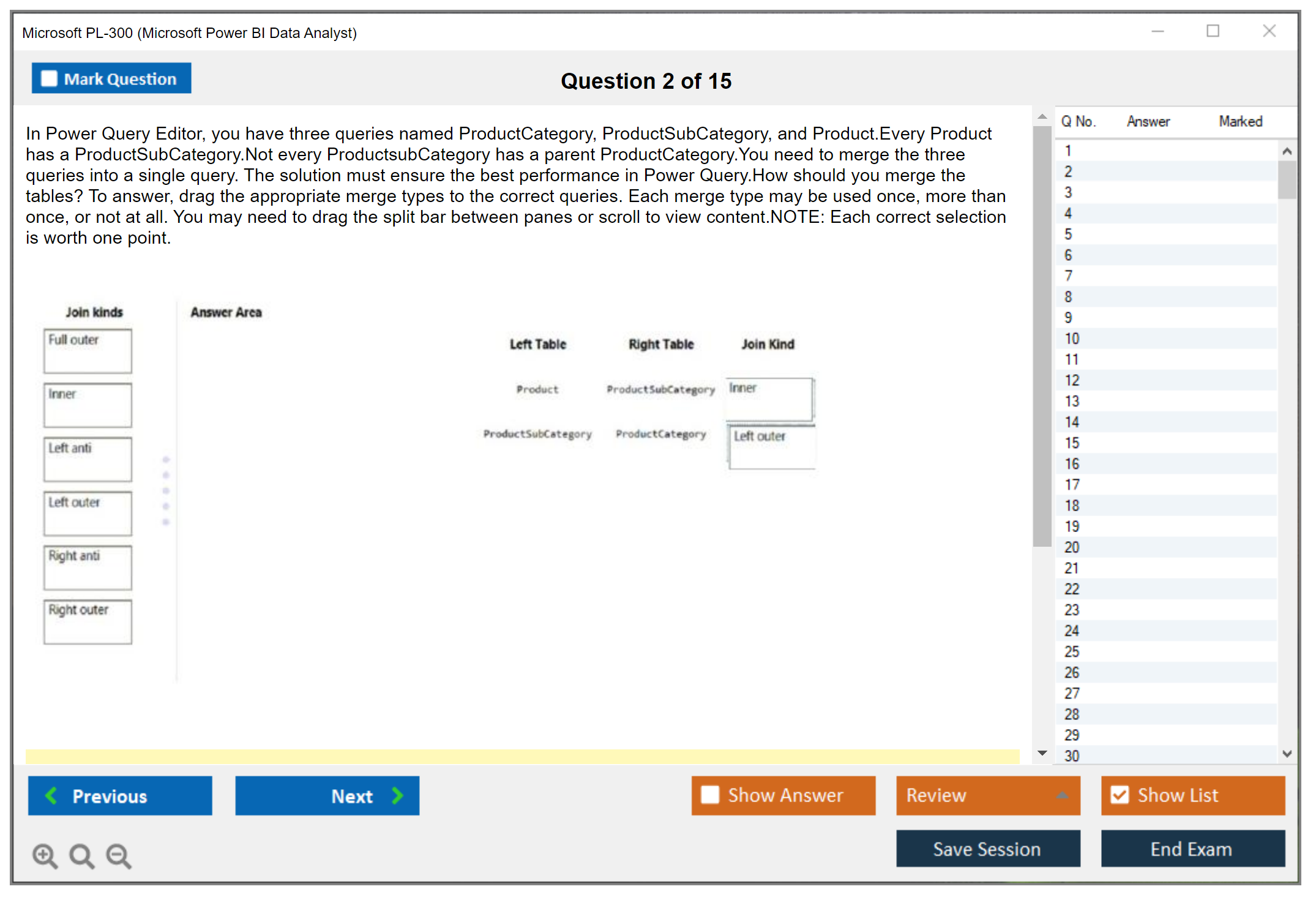
- Drag and drop: match items or place components correctly. Usually quick, unless the wording's vague.
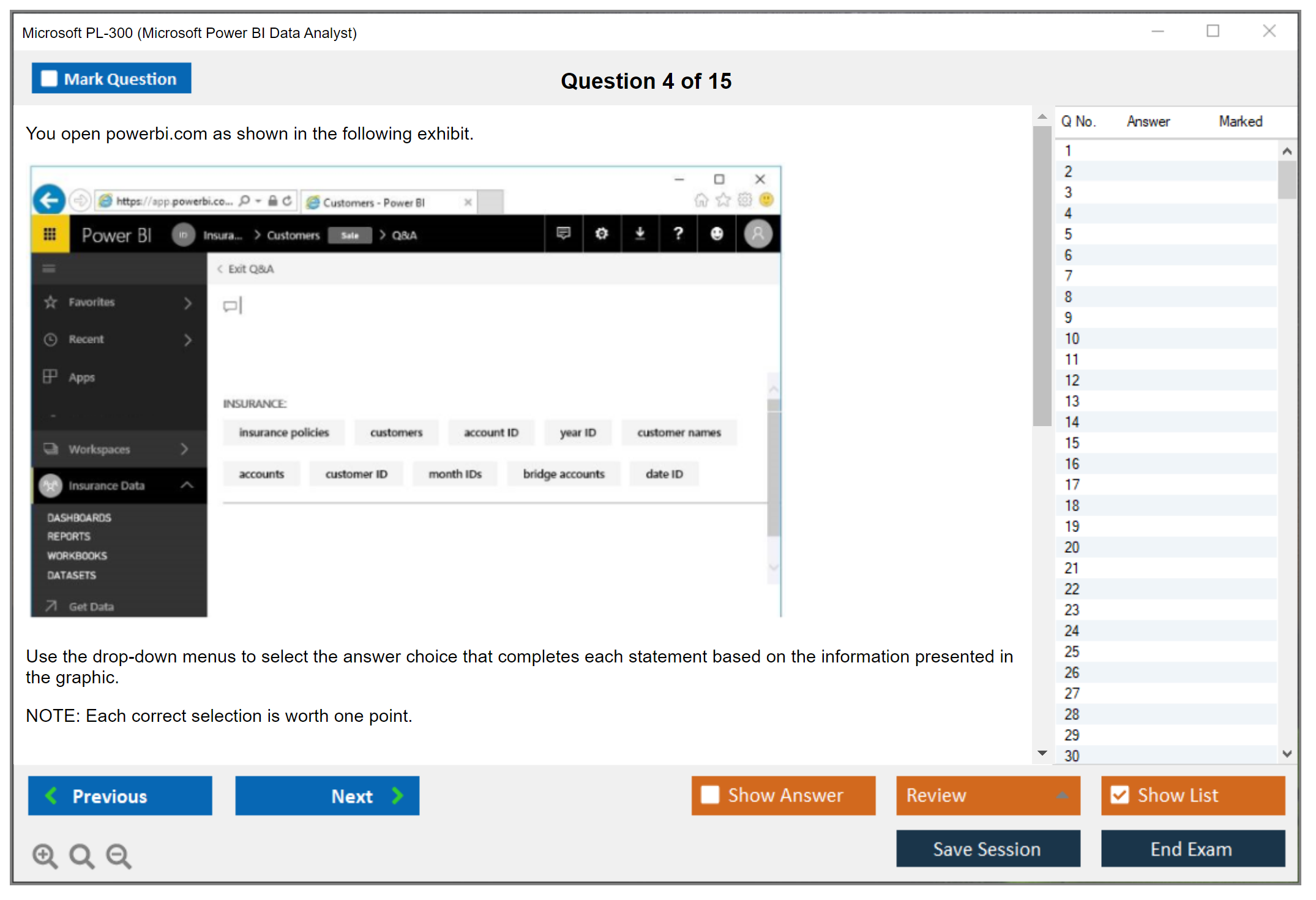
- Hot area: click the right part of a screenshot or diagram, typically UI elements.
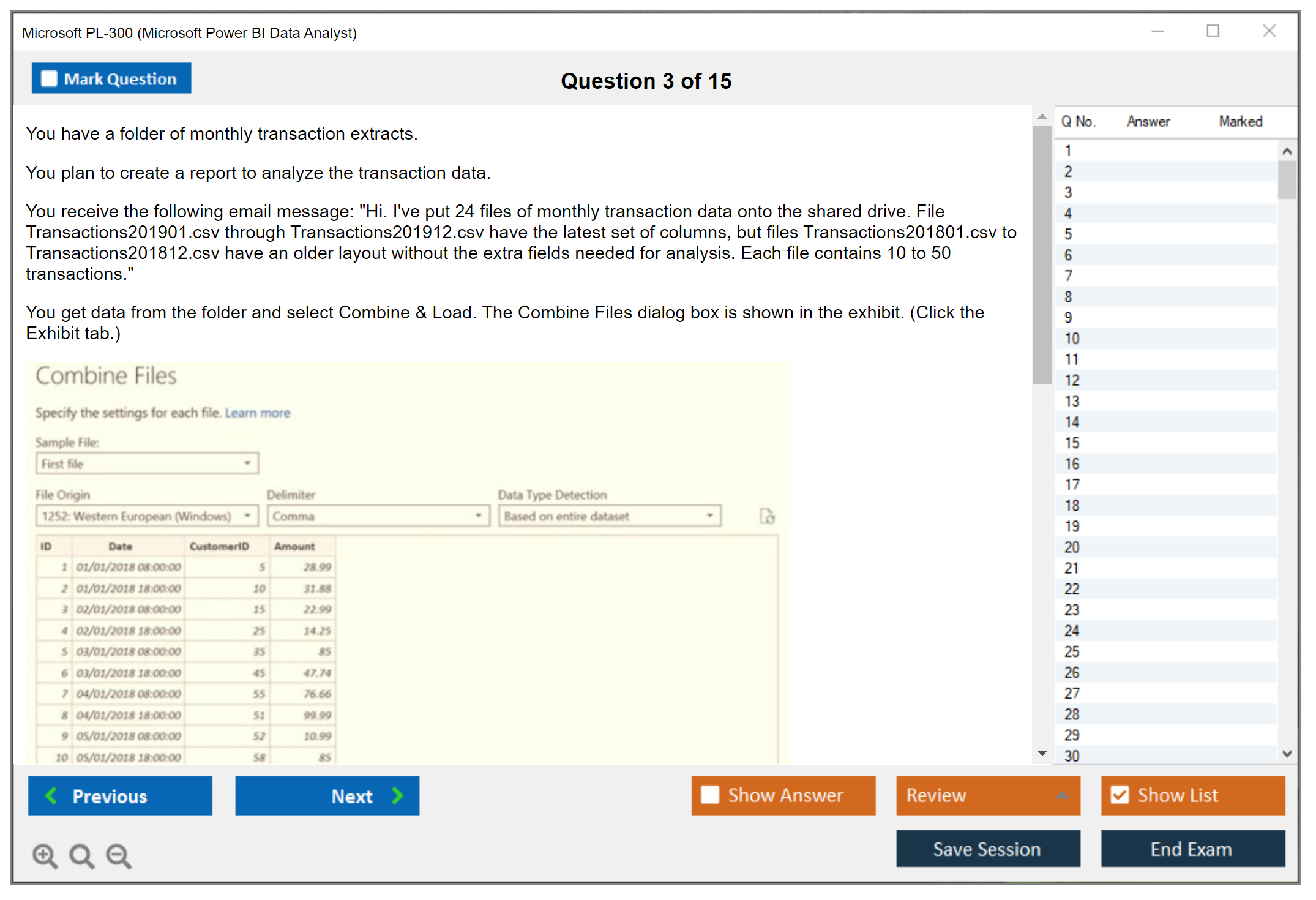
There's also a review screen where you can mark questions for review and return to them before submitting, but again, you can't return to completed case study sections. Some questions include exhibits like screenshots, diagrams, or data samples, and you've gotta actually read them carefully. Questions may reference Power BI Desktop, Power BI Service, Power BI Mobile, or Power BI Report Server, so don't be shocked when a "where is this setting" question shows up outside Desktop.
Also: the exam includes unscored pretest questions being evaluated for future use, and they're not labeled. Not gonna lie, that's annoying. You can't tell which weird question you should stop obsessing over. No penalty for wrong answers, so answer everything. Leaving blanks is just donating points.
PL-300 exam objectives (skills measured)
The PL-300 exam objectives line up with Microsoft's functional groups for the Power BI Data Analyst role, and the weightings are approximate and can vary slightly by version. Check Microsoft's official skills measured page before you book, because Microsoft updates PL-300 exam objectives periodically.
Prepare the data (25-30%) This is usually the biggest chunk, and honestly it makes sense because bad data ruins everything. You'll see getting data from files, databases, online services, and Azure data services. You'll also see profiling data for anomalies and column statistics, cleaning and transforming in Power Query (remove errors, handle nulls, filter rows, split columns), and resolving import issues. Query folding shows up a lot in spirit, even when it's not named directly, because performance and correct transformations matter.
Model the data (25-30%) Star schema best practices. Relationship direction choices. DAX measures vs calculated columns, and when calculated tables make sense. Time intelligence is a repeat guest: YoY, MoM, running totals. Model performance topics show up too: relationship config, data types, aggregations, and avoiding "I imported a billion rows because vibes." You'll likely hit row-level security role design as well, where user identity drives filters.
Visualize and analyze the data (25-30%) This is where the exam feels like a real report build. Charts, tables, matrices, maps, plus formatting and layout choices that don't look like a PowerPoint from 2009. Drill-through, bookmarks, buttons, page navigation, and interactive behavior. Dashboard items appear too, especially around Power BI dashboards and reports certification style tasks like tiles and alerts. Analytics features might show up: trend lines, forecasting, clustering, AI visuals. Some of these are easy points if you've clicked around in the Service.
Deploy and maintain deliverables (15-20%) Smallest domain, but don't ignore it. Publishing to workspaces, permissions, scheduled refresh, gateways for on-prem sources, apps for distribution, and collaboration roles. Performance monitoring's here too, like Performance Analyzer and Service metrics. This section is where "I only ever use Desktop" folks get humbled.
PL-300 cost and scheduling
PL-300 exam cost (price and regional variations)
PL-300 exam cost varies by country and currency, and taxes can change the final number. The only safe move is checking the exam's official page at booking time, because Microsoft pricing shifts and some regions have different rates. Budget for a retake too, just mentally. It lowers the stress.
Where to schedule (Pearson VUE / online proctoring)
You can take it at Pearson VUE testing centers worldwide or via online proctoring from home or the office. Online proctoring requires a webcam, microphone, stable internet, and a distraction-free room. No extra monitors. No "my roommate is cooking loudly behind me." And there are no breaks during the exam, so plan the basics before you click Start. Water, bathroom, phone off, notifications killed. Simple stuff. Easy to forget.
If you like controlled environments, go test center. If you like your own keyboard and chair, online's fine, but you've gotta treat it like a mini-audit.
Retake policy basics (what to know before booking)
Microsoft retake rules can change, so check the current policy when you schedule. The practical advice is boring but true: don't book back-to-back attempts on the assumption you'll "see the same questions." You won't, and the exam rotates content.
PL-300 passing score and scoring
PL-300 passing score (what it is and what it means)
The PL-300 passing score is 700 on Microsoft's scaled score system. That 700's not "70% correct." It's scaled. So two people can get different raw scores and still land on a similar scaled result depending on question mix and difficulty.
How Microsoft scores the exam (scaled scoring overview)
Microsoft uses scaled scoring to normalize across exam versions. Scenario complexity, question types, and pretest items are all part of why your score doesn't map cleanly to a percentage. Look, don't obsess over the math. Focus on coverage.
Score report and performance by skill area
You get an immediate pass/fail when you finish, and a detailed score report usually shows up within hours. The report breaks down performance by skill area, which is useful if you fail and need to re-aim your studying across the four objective domains.
PL-300 difficulty (what to expect)
Difficulty level for beginners vs experienced analysts
For beginners, PL-300 exam difficulty feels high because everything's connected: data shaping impacts modeling, modeling impacts DAX, DAX impacts visuals, visuals impact how stakeholders interpret results. For experienced analysts, it's more about avoiding silly mistakes under time pressure and knowing the Service side well enough to answer confidently.
Common challenging areas (DAX, modeling, performance, security)
DAX is the big one. Then modeling choices, especially relationship direction, granularity, and star schema discipline. Performance questions can get subtle, like what helps query folding or why a measure's slow. Security's usually straightforward, but RLS can get tricky when you mix identity, relationships, and filter propagation.
How long to study for PL-300 (time estimates by background)
If you already build reports weekly, 2-4 weeks of focused prep's realistic. If you're new to Power BI but comfortable with data, 6-8 weeks is more sane. If you've never touched DAX, add time. Seriously.
PL-300 prerequisites and recommended experience
Official prerequisites (what Microsoft requires)
PL-300 prerequisites are basically "none" in the strict gatekeeping sense. Microsoft doesn't require another cert first. But you're expected to know the product.
Recommended skills (Power Query, DAX basics, data modeling)
Comfort with Power Query transforms. Basic DAX measures. Dimensional modeling concepts like fact vs dimension tables. If those words feel foreign, you can still pass, but you'll need hands-on practice, not just reading.
Tools to be familiar with (Power BI Desktop, Service, gateways)
Know Desktop well. Know Service basics well enough to publish, set refresh, manage permissions, and understand workspaces and apps. Gateways matter for refresh scenarios, even if you've never installed one at work.
Best PL-300 study materials
Microsoft Learn PL-300 learning paths (official)
Start with the Microsoft Learn PL-300 learning path because it tracks the skills measured and stays relatively current. It's not perfect. But it's aligned.
Instructor-led training and labs
If your employer pays, instructor-led can be worth it for structured labs and someone to answer "why did Microsoft design it this way" questions. If you're paying yourself, I'd only do it if you struggle to self-plan.
Documentation to focus on (DAX, Power Query, RLS, deployment)
Docs that matter most: DAX basics and evaluation context, Power Query folding and connectors, RLS patterns, and Service deployment topics like refresh + gateway + workspace roles. Also, if you're coming from SQL, it helps to skim the data modeling mindset from older BI exams like DA-100 (Analyzing Data with Microsoft Power BI) just for historical context, and then move on.
PL-300 practice tests and exam prep strategy
Practice tests: what to use and what to avoid
PL-300 practice tests are useful for timing and weak-spot discovery. Avoid brain dump style sites. Not because I'm preaching. Because they train the wrong reflexes, and the real exam's scenario-heavy and UI-driven. Pick reputable providers or Microsoft's official practice assessment if available in your region.
Hands-on practice projects (datasets, dashboards, model tuning)
Build something end-to-end. Import a CSV plus a SQL source. Clean it. Create a star schema. Write 10-15 measures including time intelligence. Publish it. Set refresh. Add RLS. Then break it on purpose and fix it. That last part's where the learning sticks, and it maps directly to the active screen and case study vibe.
If you want adjacent cert context for data people, DP-300 (Administering Relational Databases on Microsoft Azure) is a different lane but it helps you understand where data comes from and why refresh and gateways behave the way they do. For old-school reporting brains, 70-778 (Analyzing and Visualizing Data with Microsoft Power BI) is dated but still relevant for fundamentals.
Final-week revision plan and readiness checklist
Focus on weak domains from practice scores. Rebuild one small report from scratch without notes. Review common DAX patterns. Confirm you can explain relationship direction choices and RLS behavior out loud. Sleep. Show up calm. It matters.
PL-300 renewal and maintaining your certification
Renewal requirements (assessment-based renewal)
PL-300 renewal requirements are assessment-based, done online, and tied to Microsoft's renewal system for role-based certs. No test center retake for renewal in the usual flow, but the rules can change, so verify in your certification dashboard.
Renewal timeline and reminders
Renewal typically opens within a window before expiration, and Microsoft sends reminders. Don't ignore them. Put your own calendar reminder too, because email filters are undefeated.
What changes to expect as Power BI evolves
Power BI changes constantly, so expect objectives to shift toward newer Service features, governance patterns, and whatever Microsoft's pushing this quarter. That's not a complaint. That's the job.
PL-300 FAQs
Is PL-300 worth it for data analysts and BI developers?
Yes, if you want a credential that maps to actual Power BI work and helps you get past HR filters. No, if you think it replaces a portfolio. Hiring managers still want to see what you built.
PL-300 vs DA-100 (what changed)
People still ask is PL-300 harder than DA-100. The vibe's similar, but PL-300 tracks the current product and current best practices more closely, and Microsoft keeps refreshing it. DA-100's retired, but you'll still see it referenced in older prep content, so treat it like background reading, not your main plan.
What jobs does PL-300 help you qualify for?
Power BI data analyst. BI analyst. Reporting analyst. Junior BI developer. Sometimes "analytics engineer" in smaller companies where titles are messy. Pair it with real projects and you're in a good spot, especially if you can talk through your modeling decisions without panicking.
And if you're also stacking Microsoft certs, it's totally normal to mix in broader infrastructure or analytics paths later, like DP-203 (Data Engineering on Microsoft Azure) once you start getting pulled upstream into pipelines and lakehouse conversations.
PL-300 cost and scheduling
Understanding the standard PL-300 exam cost
The standard PL-300 exam cost in the United States is $165 USD if you book through Pearson VUE without any discounts. Not exactly cheap, but pretty typical for Microsoft certification exams these days. Microsoft can change pricing whenever they want, so always verify the current rate on the official Microsoft certification website before you commit your money.
Pricing varies significantly depending on where you live. Microsoft and Pearson VUE adjust costs based on local market conditions, currency exchange rates, and regional economic factors. In the European Union, you're typically looking at €99-€115, though the exact amount depends on which country you're in and how VAT gets applied. The United Kingdom pricing hovers around £99-£115, fluctuating with exchange rates and regional adjustments that happen periodically.
For folks in India, the cost runs approximately ₹4,800-₹5,200. More accessible there. Canada's pricing lands around CAD $210-$225, while Australia sits at approximately AUD $240-$260 for standard registration. These prices include testing center administration fees, though you might see slight variations between specific locations.
Where to schedule your exam
All Microsoft certification exams get delivered through the Pearson VUE testing network. You schedule through your Microsoft certification dashboard after creating a profile. The process is pretty straightforward once you've got your account set up.
You've got two main delivery options: physical testing centers or online proctoring. Testing centers are located in major cities globally and provide standardized, secure environments with computers and all the necessary software already configured. These facilities are monitored, quiet, and eliminate most technical headaches that could derail your exam day. If you're someone who gets distracted easily at home or doesn't have a private space, testing centers are definitely the way to go.
Online proctoring? Same price typically. Lets you take the exam from home or your office, which sounds convenient until you realize you need to meet minimum technical requirements. Windows 10 or macOS, a functioning webcam, microphone, and stable internet connection with at least 1 Mbps bandwidth. Before you can even schedule an online proctored exam, you run through a system check to verify compatibility.
The testing space requirements for online proctoring are strict. Your room must be private with no other people present during the exam, well-lit, quiet, and your desk needs to be completely clear except for approved items. No extra monitors, phones, notes, nothing whatsoever. The proctor watches you via webcam the entire time and can terminate your session immediately if you violate policies. The check-in process alone takes 15-30 minutes, so schedule accordingly and don't cut it close.
Not gonna lie, I've seen people have technical issues during online proctoring that forced rescheduling. Make sure your system's stable beforehand. Testing centers eliminate most of that risk. I actually tried testing from my apartment once and the neighbor's kid started banging on the wall right in the middle of a different exam. That's the kind of chaos you can't control at home.
Scheduling flexibility and availability
Scheduling availability varies by location and delivery method. Book 2-4 weeks in advance if you want your preferred date and time. Peak times like evenings and weekends fill up fast, especially at popular testing centers. Weekday daytime slots typically have better availability.
You can reschedule or cancel appointments up to 24 hours before your scheduled time without penalty. That flexibility helps if your study timeline shifts or something comes up unexpectedly. Late cancellations (less than 24 hours) or no-shows? You forfeit the entire exam fee. That $165 just disappears. So don't ghost your appointment.
Retake policies and what they actually mean
If you fail the first attempt, you can schedule your second attempt immediately with no waiting period. Pretty generous compared to some certification programs out there. But if you fail the second attempt, you're waiting 14 days before you can take the third attempt, and the same 14-day waiting period applies to all subsequent attempts after that point.
Each retake costs the full exam fee. No discounted retake pricing exists for the PL-300 exam whatsoever. Fail three times? That's nearly $500 down the drain, which is why thorough preparation before your first attempt matters so much financially. The PL-300 Practice Exam Questions Pack for $36.99 seems like a smart investment when you compare it to the cost of multiple retakes that add up quickly.
Your score report identifies weak areas by domain. Actually useful. Focus your retake preparation on those deficient sections rather than re-studying everything equally, and the waiting periods get calculated from your previous exam date, not from when you receive your score report.
Discounts and cost-saving opportunities
Microsoft offers several ways to reduce the PL-300 exam cost, and you should explore all of them before paying full price. Students and educators can get up to 50% off through Microsoft Imagine Academy and participating academic institutions. You'll need a valid academic email address and verification, but that discount cuts the cost roughly in half.
Microsoft Certified Trainers (MCTs) often receive free or heavily discounted exam vouchers as part of their program benefits. Microsoft Partner Network members may access exam discounts or vouchers through their partnership tier. Nonprofit organizations might qualify for reduced pricing through Microsoft Philanthropies programs.
Corporate volume licensing agreements sometimes include exam vouchers for employee training initiatives. If your employer has a Microsoft partnership or training program, ask HR or your IT department about available vouchers because they might just be sitting there unused. Promotional offers occasionally pop up during major Microsoft events like Ignite or Build. I've seen limited-time discounts announced during these conferences that people completely miss.
Third-party training providers sometimes bundle exam vouchers with course purchases at reduced total rates. The math works out better than buying separately in some cases, though you need to make sure the training quality justifies the bundled price.
Free study materials reduce overall investment
While the exam itself costs money, the Microsoft Learn PL-300 learning path is completely free. Microsoft provides full official learning paths, modules, and documentation at no cost whatsoever, so you're not forced to pay for expensive training courses to prepare adequately.
Hands-on practice with Power BI Desktop? Also free. You can download it, work with sample datasets, build dashboards, practice DAX formulas, and experiment with data modeling without spending anything beyond your time and effort. The Power BI Service has a free tier too, though some enterprise features require Pro licensing.
Between free Microsoft Learn content, free software for practice, and affordable practice tests like the $36.99 question pack, you can prepare for this certification without breaking the bank. The exam fee itself is the main expense, which makes those student discounts and corporate vouchers even more valuable when you can get them.
Related certifications and exam costs
If you're considering other Microsoft data and analytics certifications, the pricing structure is similar across the board. The DP-300 (Administering Relational Databases on Microsoft Azure) exam costs the same $165 USD base price, as does DP-203 (Data Engineering on Microsoft Azure), and the DA-100 (Analyzing Data with Microsoft Power BI) was PL-300's predecessor with identical pricing before Microsoft retired it.
Understanding certification costs helps you plan a full learning roadmap. Some folks pursue multiple certifications to build broader expertise, and knowing each exam runs $165 (or your regional equivalent) lets you budget appropriately for a multi-cert strategy over several months or years depending on your career goals.
PL-300 passing score and scoring
What is the Microsoft PL-300 (Power BI Data Analyst) certification?
The Microsoft PL-300 certification is the current badge for the Power BI Data Analyst Associate track. Employers mention it constantly. They're hunting for someone who transforms messy datasets into clean models and then into reports that actually get used.
Honestly, it's not some "Power BI click-around" exam where you coast through menu options and call it a day. It expects analytical thinking. You're demonstrating that you can prep data, model it properly, write some DAX that doesn't break everything, publish without drama, and keep the whole system running when stakeholders inevitably ask for "one more column" every single day.
Who should take PL-300?
You build reports for stakeholders? You maintain datasets that everyone depends on? You're the unlucky person who gets pinged when refresh fails at 7 a.m.? This exam's for you.
New to BI? Cool. Already living in Power BI daily? Even better.
Skills validated by PL-300
You're measured on actual work tasks here. Power Query shaping, star schema modeling, DAX and data modeling for Power BI, security configurations, performance tuning. Then pushing content through the Power BI Service without it turning into a broken mess that nobody can use.
PL-300 exam overview
The Power BI exam PL-300 mixes question styles with scenario-based thinking. Not gonna sugarcoat it--it can feel unnecessarily wordy even when the underlying skill's pretty straightforward. Microsoft absolutely loves wrapping basic concepts in elaborate business stories about sales regions and customer churn predictions and quarterly targets. I once sat through a question about bicycle inventory that had three paragraphs before asking me to pick the right DAX function.
Exam format and question types
Expect multiple choice, multiple response, and those case study style blocks that eat up time. Some items are "select all that apply" and yeah, that distinction matters tremendously because there's no partial credit for multiple-response questions. Miss one option? The whole thing's wrong. Brutal. Realistic. Annoying.
Also, Microsoft includes unscored pretest questions scattered throughout. They don't affect your result, but they look identical to scored questions, so you can't game the system or skip strategically. Treat every question like it counts.
PL-300 exam objectives (skills measured)
Microsoft rotates the weighting occasionally, but the big buckets stay consistent:
- Prepare the data
- Model the data
- Visualize and analyze the data
- Deploy and maintain deliverables
One of these will feel easy depending on your background and what you do daily. The others? They'll expose you. Most people underestimate deploy and maintain because they live comfortably in Desktop and barely touch Service admin stuff like refresh schedules, gateways, and workspace permissions.
PL-300 cost and scheduling
PL-300 exam cost (price and regional variations)
PL-300 exam cost varies by country and currency conversion. In the US it's commonly listed around the standard Microsoft associate exam price bracket, but your checkout total may differ once taxes and region-specific pricing kick in. If your employer reimburses certification costs, grab the receipt immediately and the transcript link after you pass.
Where to schedule (Pearson VUE / online proctoring)
You schedule through Pearson VUE either at a test center or via online proctoring. Online's convenient, no commute required. It's also incredibly picky about your setup. Clear desk, stable internet, no second monitor drama allowed. Test center's less flexible scheduling-wise, but you avoid weird proctor interruptions.
Retake policy basics (what to know before booking)
Retakes are allowed, with waiting periods that increase if you keep failing attempts. The big consideration here is budgeting both time and money strategically. If you're close to passing, a focused retake plan with targeted study is smarter than panic-booking another attempt for tomorrow.
PL-300 passing score and scoring
This is the part that really messes with people's heads, so let's make it simple and clear. Understanding PL-300 passing score rules and Microsoft's scoring methodology really does reduce anxiety when you're sitting there watching the clock tick down.
PL-300 passing score (what it is and what it means)
The PL-300 passing score is 700 on a scale of 100 to 1000. That 700 represents the minimum competency level Microsoft determined you need to actually do the job effectively. Score below 700? In Microsoft's assessment, you're not yet meeting the standard for the Power BI Data Analyst Associate role. Score above 700? Stronger command of the material, but your certificate still just shows "Pass" regardless, so don't obsess about chasing a 950 unless you're doing it purely for personal pride or bragging rights.
Also--and this trips people up constantly--a scaled score of 700 does not mean you got 70% correct. People repeat that constantly. It's usually wrong.
How Microsoft scores the exam (scaled scoring overview)
Microsoft uses a scaled scoring system, not a simple percent-correct grade like high school tests. Your raw score, meaning the actual number of questions you answered correctly, gets converted into a scaled score using psychometric analysis techniques. The conversion accounts for the difficulty of the specific set of questions you received, because different candidates get different question pools and Microsoft tries hard to keep the passing standard consistent across all those variations.
Here's the practical effect. It's important to understand this part. A slightly harder version of the exam can require fewer correct answers to reach 700, while a slightly easier version can require more correct answers to hit that same 700 threshold. That's the "equating" process in action. It prevents someone from getting lucky with an easier batch and cruising through, or getting unlucky with a harder batch and failing unfairly through no fault of their own.
Under the hood, Microsoft uses Item Response Theory (IRT) style statistical models that psychometricians developed. Psychometricians analyze how items perform across the entire candidate population, calibrate difficulty precisely, and consider things like discrimination--does the question effectively separate strong candidates from weak ones--and correlation with overall competency measures. More difficult questions may contribute more to your scaled score than easier ones do. The scoring algorithm's proprietary, so you cannot calculate your scaled score from "I think I missed 12 questions." You just can't.
Score calculation happens automatically and basically immediately when you finish the exam. And no, there's no appeal process for scoring disputes. Microsoft's determination is final. Scaled scoring is standard across the certification industry, so this isn't some weird Microsoft-only trick they invented.
One more thing people notice: hitting exactly 700 is rare. Most candidates land clearly above or clearly below that threshold, because the scale conversion and question weighting don't tend to produce perfectly round outcomes at the boundary.
Score report and performance by skill area
After you finish, you get pass/fail on screen immediately. Then you can pull the detailed report from the Microsoft certification dashboard later. The score report breaks down performance by skill domain using percentage ranges like 0-25%, 26-50%, 51-75%, 76-100%. Those are relative indicators, not exact percentages correct, and they don't tell you which specific questions you missed or got right.
Failed attempts? That's where this report becomes gold, because it tells you exactly where to focus remedial study efforts. Passed attempts can show domain info too, but it's less actionable since you're already done and certified. Save your score reports anyway for your professional portfolio, and because employers can verify your certification status via Microsoft's public verification tool or transcript link.
Also, you can't infer how many questions came from each domain on your specific attempt based on the breakdown. Strong performance in one area doesn't always save you if another area's extremely weak. Consistent competence across domains is what tends to produce a passing scaled score.
PL-300 difficulty (what to expect)
Difficulty level for beginners vs experienced analysts
PL-300 exam difficulty depends heavily on whether you've actually shipped Power BI content to real users. If you've only watched videos and clicked through tutorials, the exam will feel slippery and scenario questions will confuse you. If you've built models, fought with relationships that wouldn't cooperate, and fixed refresh issues at 3 a.m., it's way more predictable.
Common challenging areas (DAX, modeling, performance, security)
DAX trips people up constantly. So does data modeling when you leave the safe world of one table and suddenly realize a bad relationship can wreck every visual on every page. Performance tuning pops up more than beginners expect it to. Row-level security and workspace deployment details also show up frequently, especially if you've never owned a dataset end-to-end through production.
How long to study for PL-300 (time estimates by background)
If you already work in Power BI weekly with real projects, 2 to 4 weeks of targeted study is common and usually sufficient. If you're newer to BI tools entirely, 6 to 10 weeks is more realistic, because you need hands-on repetition and muscle memory, not just reading documentation.
PL-300 prerequisites and recommended experience
Official prerequisites (what Microsoft requires)
There are no formal PL-300 prerequisites like mandatory courses you must complete first. You can book the exam whenever you feel ready.
Recommended skills (Power Query, DAX basics, data modeling)
You should be comfortable cleaning data in Power Query, building a star schema that actually makes sense, and writing basic DAX measures that solve business problems. If CALCULATE makes you freeze up, pause everything and practice until it doesn't. Same for context transition and filter context concepts. Those aren't optional in real projects.
Tools to be familiar with (Power BI Desktop, Service, gateways)
Power BI Desktop is table stakes. You can't pass without it. Power BI Service matters more than people admit when they're studying. Gateways, refresh schedules, sharing, apps, and workspace roles show up in exam questions because that's what breaks in production environments.
Best PL-300 study materials
Microsoft Learn PL-300 learning paths (official)
The Microsoft Learn PL-300 learning path is still the best free backbone for preparation. It maps closely to PL-300 exam objectives and keeps you honest about knowledge gaps you didn't know existed.
Instructor-led training and labs
A live class helps if you need structure and accountability. Labs help more, honestly. I mean, you don't learn modeling by highlighting text in a PDF. You learn it by building a model, breaking it spectacularly, and fixing it.
Documentation to focus on (DAX, Power Query, RLS, deployment)
Focus on official Microsoft docs for DAX functions you actually see in business scenarios. Power Query behavior quirks, RLS patterns, and Service deployment basics. Skip random blog posts that teach hacks without explaining context or underlying principles.
PL-300 practice tests and exam prep strategy
Practice tests matter, but choose carefully and use them right. If you want a structured set to drill weak domains, the PL-300 Practice Exam Questions Pack is one option people use to pressure-test their knowledge, and you can circle back after review to see if the same mistakes keep happening.
Practice tests: what to use and what to avoid
Avoid anything that feels like pure memorization dumps with zero explanations or rationale. Use practice tests that force you to reason about models and visuals and business requirements. If you do buy question packs, use them like diagnostics, not like a cheat sheet you memorize blindly. The PL-300 Practice Exam Questions Pack fits best when you treat it as "find my gaps fast," then actually go build the thing in Power BI Desktop.
Hands-on practice projects (datasets, dashboards, model tuning)
Build one project end-to-end from scratch. Import data from multiple sources, clean it properly, model it with relationships. Add calculated measures. Publish to Service. Set up scheduled refresh. Add RLS for different user groups. Break something on purpose and fix it systematically. That's how you turn study materials into genuine exam confidence.
Final-week revision plan and readiness checklist
Last week is review and repetition, not learning new concepts. Hit your weakest domain first thing, re-read the Microsoft Learn sections you rushed through initially, do a couple timed practice sets under exam conditions, and stop cramming the night before. If you're using the PL-300 Practice Exam Questions Pack, re-attempt only the ones you missed previously and write down why you missed them, because that's the part your brain actually needs to reinforce.
PL-300 renewal and maintaining your certification
Renewal requirements (assessment-based renewal)
PL-300 renewal requirements are assessment-based on Microsoft Learn platform. No extra paid exam required. You renew by passing the renewal assessment they provide.
Renewal timeline and reminders
Renewal is typically annual from your certification date. Microsoft sends email reminders, but set your own calendar reminder too, because those emails get buried in spam folders.
What changes to expect as Power BI evolves
Power BI changes constantly. Features move, terminology shifts, new capabilities appear. The renewal process reflects that evolution, and it's honestly a decent way to keep your skills from going stale in a fast-moving product.
PL-300 FAQs
Is PL-300 worth it for data analysts and BI developers?
Yes, if your work touches Power BI and you want a clean signal for employers who are evaluating candidates. Passing proves you meet Microsoft's baseline for the role, and it often helps with internal promotions when managers don't know how to judge BI skills objectively.
PL-300 vs DA-100 (what changed)
People ask "Is PL-300 harder than DA-100?" It's different more than harder, really. PL-300 aligns to the modern Power BI workflow and feature set, and the Service side gets more attention than many DA-100-era study plans expected or prepared for.
What jobs does PL-300 help you qualify for?
Power BI data analyst, BI developer, reporting analyst, analytics engineer in smaller organizations, and "the person who owns dashboards" in bigger orgs with specialized roles. The certification won't guarantee a job by itself. But it does prove you can meet a professional standard, and that matters when hiring teams are comparing candidates who all claim they "know Power BI" without evidence.
PL-300 difficulty (what to expect)
What the PL-300 exam difficulty actually looks like
Real talk here.
The PL-300 exam difficulty really hinges on your background. Been using Power BI Desktop for a few months at work, building reports, messing with DAX formulas, connecting to data sources? This exam'll feel pretty reasonable. Not easy exactly, but you can handle it.
But if you're totally new to Power BI or coming from a non-analytical background? Not gonna lie, you're in for a rough ride. Microsoft designed this thing to test whether you can actually do the job of a Power BI Data Analyst, not just whether you memorized some definitions or skimmed through slides the night before. That means scenario-based questions that make you think through real problems: "A user reports that this visual isn't filtering correctly, what's wrong with the relationship?" or "You need to optimize a report that's taking 45 seconds to load, what do you check first?"
The pass rate isn't published anywhere official. From what I've seen in forums and talking to people who've taken it, maybe 60-70% pass on the first attempt if they've done solid prep, though that's just my observation. The folks who fail? Usually either rushed their study or had zero hands-on experience and tried to cram from dumps (which, yeah, doesn't work well with performance-based testing).
Where beginners struggle vs experienced analysts
Look, if you're already working as a data analyst or BI developer, you've got a massive head start. You understand concepts like star schemas, fact tables, dimension tables without needing a tutorial. You know why normalization matters for databases but denormalization often makes sense in Power BI models. It's just how dimensional modeling works. You've probably written SQL queries, which helps a ton when you're working with Power Query M code.
Beginners face a steeper learning curve. Period.
Every exam objective feels like climbing uphill. The data modeling part alone can be brutal if you've never designed a data model before. You need to understand relationships (one-to-many, many-to-many, bidirectional filtering), cardinality, cross-filter direction, all that stuff. And then there's row-level security, which trips up even experienced people sometimes.
The DAX part? That's where I see the most pain. Beginners often think they can just memorize formulas like it's a vocab test, but the exam tests whether you understand context. Row context vs filter context, how CALCULATE works, why RELATED only works in certain directions and not others. You'll get questions like "This measure returns the wrong value, what's the issue?" and you need to actually understand what's happening under the hood, not just pattern-match to something you saw in a practice test.
Experienced analysts who've used other BI tools (Tableau, Qlik, even Excel pivot tables) have transferable skills, but Power BI has its own quirks that'll catch you off guard. The way relationships work is different from joins in SQL. Similar but not identical. DAX isn't quite like Excel formulas even though it looks similar at first glance. Power Query has its own logic that feels weird if you're used to ETL tools like SSIS or Informatica.
The sections that hit hardest
DAX is the big one.
Everyone says it, and they're right. The exam doesn't just ask you to write basic SUM or AVERAGE measures. Those are the easy points, honestly. You'll see questions about time intelligence (DATEADD, SAMEPERIODLASTYEAR), iterator functions (SUMX, FILTER), and tricky scenarios involving multiple tables where context matters more than the formula itself. One question might show you a DAX formula and ask what it returns, or show you a wrong result and ask why it's broken, which requires you to trace through the logic step by step.
Data modeling? Second major pain point.
You need to understand when to use calculated columns vs measures (hint: almost always use measures for aggregations). The relationship questions can be tricky. They'll show you a model with multiple tables and ask which relationship is causing issues, or how to fix circular dependencies that're breaking everything.
Performance tuning questions catch people off guard because, the thing is, you can build working reports without ever thinking about speed until something breaks. But the exam wants you to know about query folding in Power Query, why DirectQuery might be slow compared to Import mode, how to use aggregations, when to use variables in DAX for better performance and not just readability. If you've only built reports with small datasets, you're gonna struggle here.
Row-level security and deployment stuff? Easy to overlook during studying, which's a mistake. You need to understand how RLS works with different roles, how to test it properly, and the difference between deploying to workspaces, creating apps, and sharing reports directly. The gateway questions (on-premises vs cloud) are usually straightforward but you need to have actually worked with them or at least read the documentation carefully.
I remember once spending two hours troubleshooting why a report looked perfect in Desktop but completely broke when published to the service. Turned out to be a gateway authentication issue I'd never encountered before. That kind of thing doesn't show up in study guides but it's exactly what the exam tests for.
How long should you actually study
Microsoft says the exam's for people with 6-12 months of Power BI experience.
That's probably accurate if you're using it regularly at work, building stuff daily. For beginners with no Power BI background, I'd say 2-3 months minimum if you're putting in 10-15 hours a week, and that's assuming you're doing actual hands-on practice, not just watching videos passively while pretending to take notes. You need to build reports, import messy data, create data models, write DAX formulas that don't work, then figure out why they're returning blanks or wrong numbers.
If you've got some Power BI experience but haven't touched certain areas (maybe you've built reports but never deployed to the service, or you've used DirectQuery but never built composite models), 4-6 weeks of focused study's realistic. Hit the areas you're weak in. Do practice tests. Build a few projects that cover different scenarios.
The people who try to cram in 2 weeks? Usually fail unless they're already doing Power BI work daily and just need to fill in knowledge gaps. The exam's too hands-on for that approach to work well.
What makes this exam different from other Microsoft certs
The Microsoft PL-300 certification sits at the associate level, which means it's harder than the fundamentals exams (like PL-900) but more approachable than expert-level stuff. But it feels harder than some of the other associate exams because of how scenario-heavy it is compared to definition-based testing.
You won't get many "what is this definition" questions. Instead, you get screenshots of data models with "which relationship should you modify?" or DAX code with "this returns blank, what's wrong?" or performance scenarios where you need to recommend the best tuning approach from four options that all sound plausible.
The exam also covers the full workflow. Preparing data in Power Query, modeling it correctly, visualizing it in ways that make sense for users, then deploying and maintaining it in the Power BI service. That's a lot of ground to cover. Compare that to something like 70-778 which was the older Power BI exam. PL-300 has more emphasis on the service, security, and governance aspects that matter in real enterprise environments.
If you've taken other data-focused Microsoft exams like DP-300 for Azure SQL, you'll notice PL-300 feels less about memorizing configurations and more about understanding how the tool actually works in practice. The scenario-based approach means you can't just dump knowledge from your short-term memory. You need to apply it and think through problems.
My take on realistic expectations
Don't underestimate this exam.
But don't panic either. If you're working with Power BI regularly and you spend a month doing focused prep, really working through the PL-300 exam objectives, building practice models, writing DAX that actually works, working with the service features, you should be fine.
The difficulty isn't artificial or tricky just to mess with you. Microsoft isn't trying to fail you with gotcha questions that have nothing to do with real work. They want to know if you can actually do the work, which's fair when you think about it. So if you can build a decent data model, write measures that work correctly in different filter contexts, create useful visualizations that answer business questions, and deploy reports that people can actually use without calling you every five minutes, you're probably ready.
Just make sure you've actually touched every area covered in the exam objectives. I've seen people who are great at DAX fail because they never learned about deployment pipelines or dataflows or workspace roles. Or people who build beautiful reports but can't fix a slow-loading model when performance becomes an issue. The exam's broad in scope, so your prep needs to be too.
Conclusion
Wrapping up your PL-300 path
Look, getting the Microsoft PL-300 certification isn't something you knock out in a weekend. Takes real work.
The PL-300 exam difficulty really depends on where you're starting from. If you've been building Power BI dashboards and reports certification projects at work for a year, you're in a different position than someone who just discovered DAX and data modeling for Power BI last month. Both can pass, honestly, but the study timeline looks totally different. What matters is that you go in prepared, not just confident. Confidence without preparation? That's just setting yourself up for disappointment, and nobody wants to shell out another $165 because they walked in thinking they'd wing it.
Your best bet? Mix up your PL-300 study materials.
The Microsoft Learn PL-300 learning path is solid and free, which is great because the PL-300 exam cost already runs around $165 (sometimes more depending on your region), so why blow extra money on overpriced courses when the official stuff covers the PL-300 exam objectives thoroughly? Actually, scratch that. The official materials aren't always exciting, but they're thorough. Add some hands-on labs where you're actually building models, writing DAX measures, setting up row-level security, optimizing slow reports. That hands-on work is what sticks. Reading about relationships in data models? Forgettable. Breaking something and fixing it yourself? That stays with you.
I remember spending a whole afternoon trying to figure out why my measure kept returning blank values. Turned out I had a filter context issue I didn't understand yet. Probably wasted three hours on it. But now? I spot that mistake in about ten seconds when I see someone else make it.
Don't skip PL-300 practice tests either. They're not just about memorizing answers. They help you understand how Microsoft phrases questions, which can be tricky on exam day. You'll see performance-based scenarios, case studies, and those annoying questions where two answers feel right but only one matches what Microsoft wants. Practice tests show you where your gaps are before it costs you that PL-300 passing score of 700.
And honestly? Once you pass and get that Power BI Data Analyst Associate badge, you're not done.
The PL-300 renewal requirements kick in after a year, with a free online assessment you need to complete. Power BI evolves fast, so staying current matters if you want the cert to actually mean something to employers. I've seen folks let their certs lapse and then wonder why recruiters aren't calling. The renewal's free, just do it.
If you're serious about passing on your first attempt and want to test your readiness with questions that mirror the real exam format, check out the PL-300 Practice Exam Questions Pack. It's one of the better resources for identifying weak spots before you sit for the Power BI exam PL-300.
Not gonna lie, the exam's challenging. But if you can wrangle messy data sources, build a decent star schema, write functional DAX, and explain your visualizations to non-technical stakeholders, you've got what it takes. Just put in the hours.

